
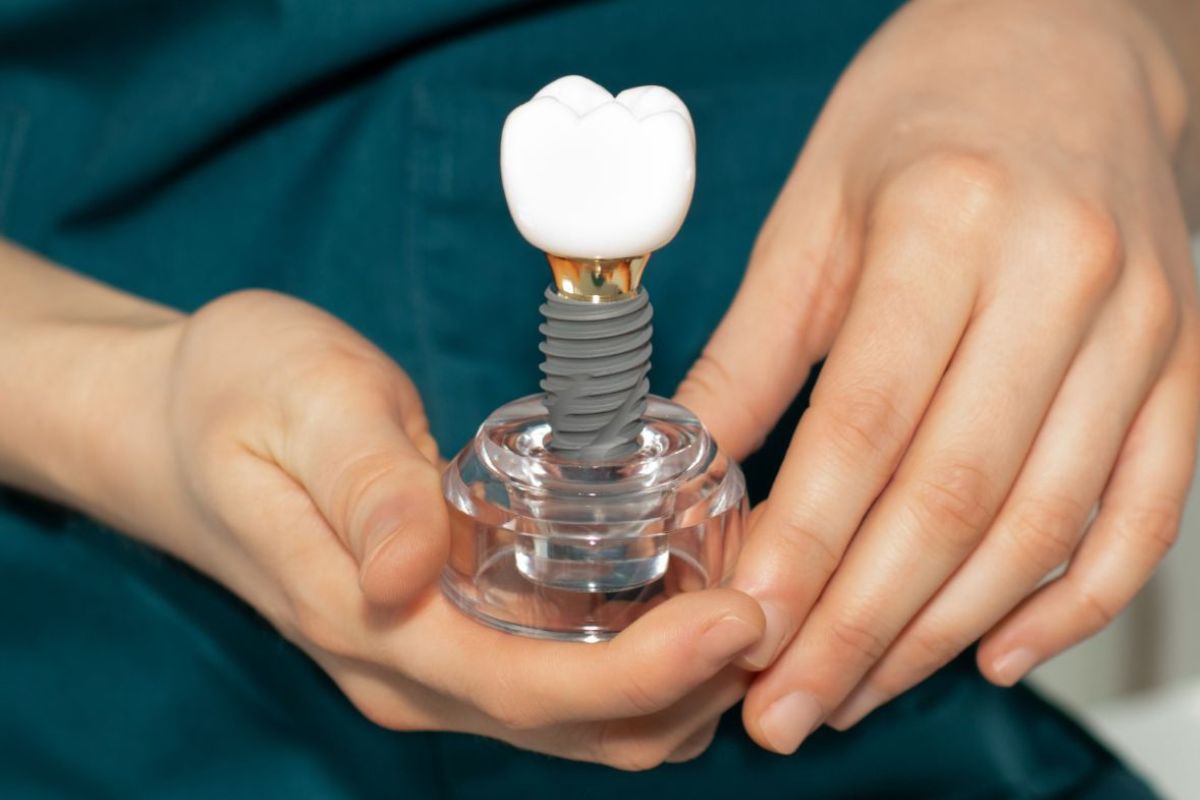
If you lost a tooth several years ago and never replaced it, you may assume you have missed your opportunity to get an implant. Fortunately, the passage of time alone does not automatically prevent you from receiving one. Many people can have a missing tooth replaced with an implant even years after the original tooth was lost. The key question is not simply how long the space has been empty, but what has happened to the jawbone, gums, neighboring teeth, and bite during that time.
The longer a tooth remains missing, the more likely changes have occurred in the surrounding tissues. Bone may have decreased in volume, nearby teeth may have shifted, or the opposing tooth may have moved toward the empty space. These changes can make treatment planning more involved, but they do not necessarily rule out an implant.
At Perfect Smile Tulsa, Dr. Mark Davis evaluates these factors carefully when helping patients explore options for replacing long-missing teeth. For patients in Tulsa, a comprehensive examination and advanced imaging can provide a much clearer answer about whether an implant remains possible.
Is It Really Possible to Get an Implant Years After Tooth Loss?
Yes. There is no universal deadline after which an implant can no longer be considered.
Some patients replace a missing tooth soon after extraction, while others wait several years before seeking treatment. What matters most is whether the mouth can provide a healthy, stable environment for the implant.
A successful dental implant procedure depends on factors such as available jawbone, gum health, the position of surrounding teeth, your bite, and overall health. That is why two people who have both been missing a tooth for ten years may receive very different treatment recommendations.
An examination allows us to determine what has changed since the tooth was lost and what may be necessary to create a stable foundation for its replacement.
What Happens to Your Jaw After a Tooth Is Lost?
One of the most important changes following tooth loss occurs beneath the gums.
Natural tooth roots transfer forces to the jawbone when you bite and chew. After a tooth and its root are gone, the bone in that particular area no longer receives the same stimulation. Over time, the jawbone can lose volume.
This process is known as bone resorption.
The amount of change varies considerably among patients. The location of the missing tooth, length of time it has been absent, oral health, anatomy, and other individual factors can all influence how much bone remains.
This is particularly relevant when considering an implant because the implant post needs adequate bone for support. At Perfect Smile Tulsa, 3D imaging and X-rays are used during implant evaluation to assess jawbone density and overall oral health.
Does Bone Loss Mean You Cannot Get an Implant?
Not necessarily.
Finding that the jaw has lost some bone does not automatically mean an implant is impossible. Instead, the dentist needs to determine whether the remaining bone has sufficient height, width, and density to support the planned implant.
If adequate bone remains, implant placement may be possible without additional bone preparation.
When there is insufficient support, bone grafting may be recommended to rebuild the area before implant placement. The graft is given time to heal and develop a stronger foundation. Once healing has progressed sufficiently, implant treatment may move forward.
Because every patient’s anatomy is different, the need for grafting cannot be determined simply from the number of years the tooth has been missing.
Can Nearby Teeth Shift Into an Old Tooth Gap?
Yes, and this is another reason replacing a long-missing tooth can require additional planning.
Teeth naturally help maintain one another’s positions. When one disappears, neighboring teeth may gradually tilt or drift toward the open space. The tooth in the opposite arch may also move because it no longer contacts its former biting partner.
If significant movement has occurred, there may no longer be enough room to position a replacement tooth properly.
We therefore look beyond the empty space when planning an implant. The relationship between the surrounding teeth and the patient’s overall bite is important because the final restoration needs to function comfortably alongside the rest of the smile.
What Makes Someone a Candidate Years After Losing a Tooth?
There is no single factor that determines candidacy. Instead, several pieces of information need to be considered together.
You may be considered for implant treatment when:
- Your gums are healthy enough to support treatment.
- There is sufficient jawbone or the area can potentially be rebuilt.
- There is appropriate space for the planned restoration.
- Your overall health supports normal healing.
- Existing oral health problems are appropriately managed.
- You are prepared to maintain consistent oral hygiene and dental visits.
Age alone is generally not the deciding factor. Perfect Smile Tulsa notes that there is no upper age limit for implants as long as a patient is healthy enough for routine dental surgery and has adequate bone support.
How Do We Evaluate an Old Missing-Tooth Site?
A visual examination alone cannot show everything happening beneath your gums.
Before recommending a dental implant procedure, we need to evaluate the entire area carefully. At Perfect Smile Tulsa, the initial implant consultation includes a comprehensive evaluation along with X-rays and 3D imaging.
These diagnostic tools help assess jawbone density and the structures surrounding the proposed implant location.
We also consider the condition of your gums, remaining teeth, bite, and general oral health. Your medical history matters as well because certain health conditions, medications, tobacco use, and other factors can affect healing.
This assessment allows implant treatment to be planned according to your present anatomy rather than assumptions based on when you lost the tooth.
What Happens If You Have Enough Bone?
If examination and imaging show that your jaw has adequate support, treatment can progress according to the recommended plan.
Perfect Smile Tulsa describes implant treatment in four primary stages.
1. Consultation
The first stage involves evaluating your oral health and jawbone with appropriate imaging. Your treatment options and individual needs can then be discussed.
2. Implant Placement
A titanium implant post is carefully positioned in the jawbone. This post functions as the foundation for the future replacement tooth.
3. Healing and Osseointegration
Healing occurs over the following months. During this period, the implant integrates with the surrounding jawbone through a biological process called osseointegration.
This integration is important because it creates the stable foundation needed for the final restoration.
4. Final Restoration
After sufficient healing, a custom restoration is created and attached. Depending on the number and location of missing teeth, the final restoration may involve a crown, bridge, or implant-supported denture.
What If You Need a Bone Graft First?
For someone who has been missing a tooth for many years, bone grafting is one possible additional step, but it is not automatically necessary.
A graft may be recommended when the available bone cannot adequately support the planned implant. Its purpose is to increase bone volume and create a more suitable foundation.
If grafting is required, treatment usually takes longer because the grafted area needs time to heal before implant placement. Perfect Smile Tulsa notes that bone grafting can add several months to the overall implant timeline.
That additional time can be worthwhile when it helps create the support necessary for predictable implant placement.
How Long Can Treatment Take for an Older Missing Tooth?
Treatment length varies according to your starting condition.
Perfect Smile Tulsa indicates that implant treatment can take approximately six to nine months in some cases because healing is necessary before the permanent restoration is attached. Additional procedures such as bone grafting can extend that timeline.
The dental implant procedure should therefore be viewed as a process rather than a single appointment.
Although waiting several months for healing may seem lengthy, osseointegration is an important part of establishing a stable foundation. Your specific timeline can only be estimated after examination and imaging.
Why Consider Replacing a Tooth Even After Years?
You may have adapted to the missing tooth, especially if it is toward the back of your mouth. However, replacing it can offer several functional and oral-health benefits.
Implants can help restore chewing ability and fill an unwanted space in the smile. Because an implant is supported by the jaw rather than neighboring natural teeth, surrounding teeth do not have to serve as its primary support.
Perfect Smile Tulsa also identifies preservation of surrounding teeth, improved chewing ability, support for jawbone health, and restoration of a natural-looking smile among the potential benefits of implants.
For many patients, addressing an old missing tooth is therefore about more than appearance. It is also about rebuilding function.
Is Waiting Even Longer a Problem?
If you are considering replacing a tooth that has already been missing for years, there is little benefit in assuming that it is automatically too late.
Jawbone changes and tooth movement can continue after tooth loss. Getting evaluated now gives you useful information about your current condition and available options.
An examination does not obligate you to proceed with treatment. Instead, it helps answer practical questions: Is enough bone present? Has the space changed? Is grafting likely to be necessary? How long could treatment take?
Those answers are much more valuable than choosing not to pursue an implant simply because several years have passed.
How Should You Care for an Implant Long Term?
Implants cannot develop cavities in the way natural tooth enamel can, but the surrounding gums and bone still require consistent care.
Daily brushing and cleaning around the restoration help control plaque. Regular professional examinations are also important so your dentist can monitor the implant, restoration, bite, gums, and surrounding tissues.
Avoiding tobacco and following recommendations for maintaining gum health may also support long-term outcomes.
Perfect Smile Tulsa states that implants can last 20 years or more, and sometimes a lifetime, with appropriate care. The longevity of an individual restoration depends on several clinical and personal factors, so ongoing maintenance remains essential.
Missing a Tooth for Years? Schedule an Implant Consultation in Tulsa
Having lived with a missing tooth for five, ten, or even more years does not automatically mean you have waited too long. The more important issue is the condition of your jawbone, gums, bite, and surrounding teeth today.
At our dental practice, we use comprehensive examinations, X-rays, and 3D imaging to determine whether implant treatment is appropriate and whether additional preparation may be necessary. We can help you understand your options based on your individual oral health rather than the number of years since your tooth was lost.
If an old gap in your smile is affecting your confidence or chewing ability, consider having it evaluated. Schedule a consultation with our Tulsa dental team to find out whether a dental implant procedure can help you restore the missing tooth and rebuild a functional, complete smile.