
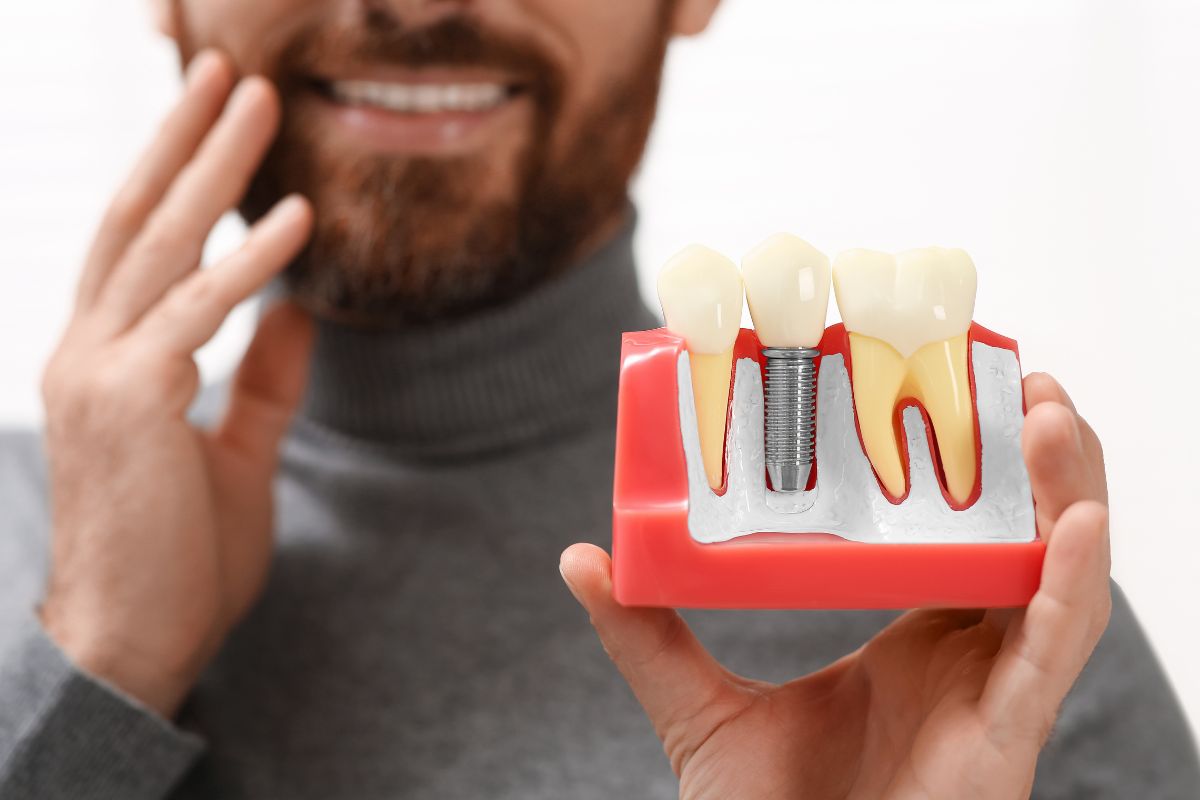
A dental implant is designed to provide stable support for a replacement tooth, so feeling movement can understandably cause concern. If your implant suddenly feels loose when you bite, chew, or touch the area with your tongue, it is important to have it checked.
The first thing to understand is that the word “implant” can refer to different components of the completed restoration. Sometimes the implant post itself is stable while the crown or connecting component has become loose.
Other times, movement can indicate a problem affecting the implant and surrounding bone.
Because these situations require different approaches, a dental evaluation is the safest way to determine what is happening.
Should a Dental Implant Move?
A fully integrated implant post should not move like a natural tooth.
During dental implant treatment, the implant is placed into the jawbone and allowed to integrate with the surrounding bone. This process provides the stable foundation needed to support the replacement tooth.
If you can feel movement in the implant itself after healing, that is not something to ignore.
However, movement in the visible crown does not necessarily mean the implant post has failed.
The Crown May Be Loose
A dental implant restoration generally includes an implant post, a connecting component, and a crown or other replacement tooth.
If the crown or connecting component becomes loose, you may feel movement when chewing even though the implant post remains stable in the jaw.
This distinction is important.
A dentist can determine whether the movement is coming from the restoration or the implant itself and recommend the appropriate next step.
What Can Cause an Implant to Feel Loose?
Several issues can produce a sensation of movement.
A Loose Restoration Component
The crown or abutment can sometimes loosen. You may notice that the replacement tooth feels different when you bite or that it moves slightly.
This can often be addressed by examining and repairing or replacing the affected component, depending on the situation.
Bone Loss Around the Implant
Implants depend on healthy supporting bone.
If inflammation or other factors cause bone loss around an implant, the stability of the implant can be affected.
Bone loss may develop gradually and may not cause obvious symptoms at first, which makes regular implant maintenance important.
Infection Around the Implant
Inflammation and infection around an implant can affect the surrounding tissues.
You may notice:
- Redness.
- Swelling.
- Bleeding.
- Tenderness.
- Bad breath.
- A bad taste.
- Gum recession.
- Increased sensitivity.
- A feeling of movement.
These symptoms do not automatically mean the implant is failing, but they should be evaluated.
Excessive Bite Forces
Clenching and grinding can place substantial pressure on teeth and implant restorations.
If an implant is repeatedly exposed to excessive forces, the restoration or surrounding structures may be affected.
Your dental team can evaluate your bite and discuss ways to reduce harmful pressure when appropriate.
Can an Implant Feel Loose During Healing?
The healing period after implant placement is different from the period after the implant has fully integrated.
During early healing, the implant is still undergoing the biological process that allows it to become securely integrated with the jawbone.
Patients should follow their provider’s instructions about chewing, oral hygiene, and follow-up visits during this stage.
If you believe an implant is moving during healing, contact the dental office rather than testing it repeatedly.
What Should You Do If Your Implant Feels Loose?
Do not try to tighten or reposition anything yourself.
Avoid repeatedly moving the implant with your tongue or fingers.
If the area is uncomfortable, follow the post-treatment instructions you were given and avoid putting unnecessary pressure on it until you receive professional guidance.
Contact your dental provider and explain what you are experiencing.
The dentist may need to examine the restoration, check the surrounding tissues, evaluate your bite, and use dental imaging to assess the implant and supporting bone.
Is a Loose Implant Always a Sign of Failure?
No.
The sensation of looseness does not tell you which component is responsible.
If the crown is moving but the implant remains stable, the problem may be limited to the restoration. If the implant post itself has become mobile, the situation is more serious and requires prompt evaluation.
This is why it is important to have the area examined rather than assuming the implant has failed.
How Can You Protect Dental Implants?
Good home care remains important after implant treatment.
Brush twice daily and clean carefully around the implant restoration. Depending on your restoration and dental anatomy, your dentist may recommend floss, interdental brushes, water flossers, or another cleaning method.
Regular professional cleanings are also important because plaque and bacteria can accumulate around implants just as they can around natural teeth.
If you grind or clench your teeth, ask your dental provider whether additional protection may be appropriate.
Why Regular Implant Checkups Matter
A dental implant can feel completely normal while changes are developing around it.
Routine examinations allow your dentist to monitor the gums, restoration, bite, and supporting structures.
Early detection can make it easier to address problems before they become more advanced.
At Perfect Smile Tulsa, dental implant care includes evaluating the health and stability of the implant and surrounding tissues. The practice also provides guidance for patients who are considering implants or already have implant restorations.
Conclusion: A Loose Feeling Should Be Checked
A dental implant should provide stable support once it has fully healed. If it suddenly feels loose, do not assume that the entire implant has failed. The movement could be coming from the crown or another component, or it could be related to the tissues supporting the implant.
The only way to determine the cause is through a professional examination.
If your dental implant feels loose or unstable, visit our dental office for an evaluation.