
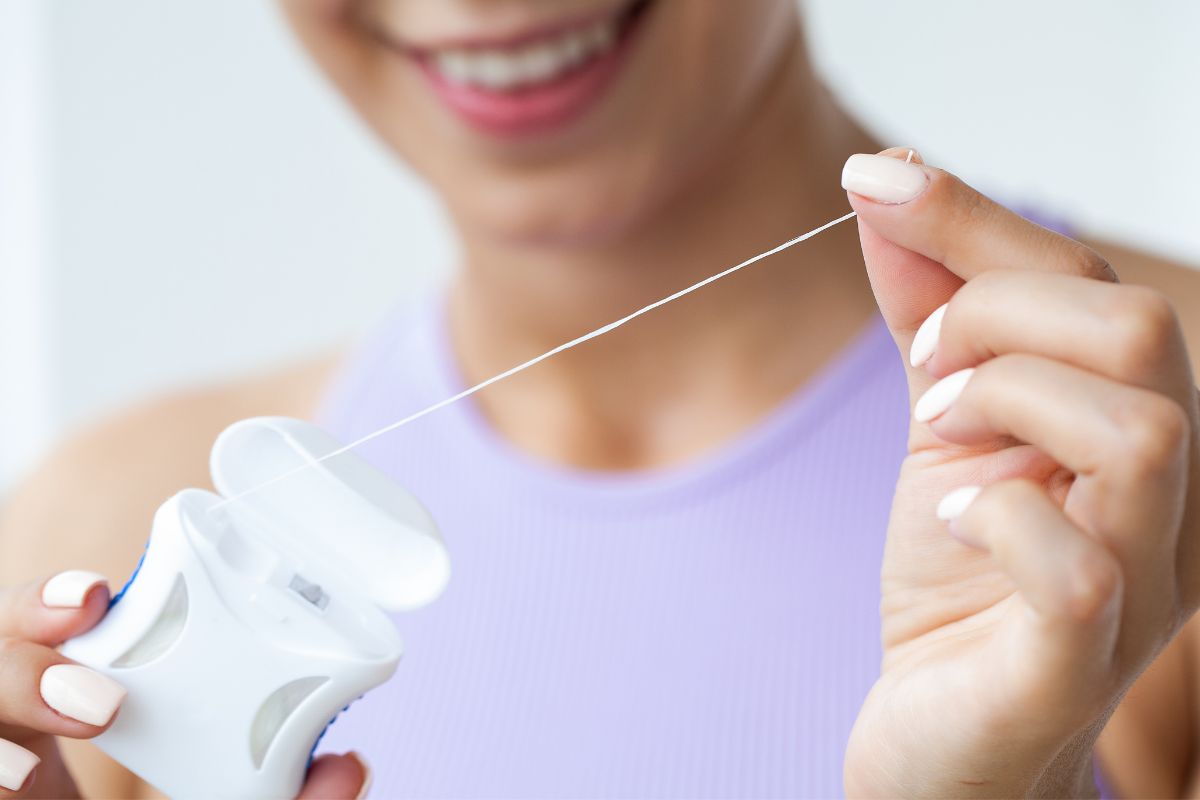
Most people assume that once their dental implants are in place, oral hygiene becomes a little less demanding. After all, implants can’t get cavities, right? That part is true, but here’s what often gets overlooked: the gum tissue and bone surrounding your implant can absolutely become infected, inflamed, or damaged if you skip proper cleaning. Flossing, in particular, is one of those habits that makes a real difference in how well your implant holds up over time.
If you’ve recently undergone a dental implant procedure or are still planning one, understanding how to care for your implant at home is just as important as the treatment itself. Skipping flossing or doing it incorrectly can lead to a condition called peri-implantitis, which is essentially gum disease around an implant. Left untreated, it can cause bone loss and, in severe cases, implant failure.
The good news? Flossing around implants isn’t complicated. It just requires the right tools and a little adjustment to technique.
Why Regular Flossing Doesn’t Fully Work for Implants?
Standard dental floss works well for natural teeth, but implants have a slightly different structure. Natural teeth are connected to the jawbone through a periodontal ligament, which acts as a cushion and helps filter bacteria to some degree. Implants, on the other hand, are fused directly to the bone through a process called osseointegration.
This means the gum tissue around your implant is more vulnerable to bacterial buildup. When plaque accumulates along the gumline and between the implant and neighboring teeth, it can trigger inflammation more quickly than it might around a natural tooth. Regular floss can work, but it needs to be used properly, and in many cases, specialized flossing tools make the job easier and more effective.
The Tools That Actually Help
1. Implant-Specific Floss or Super Floss
Oral-B Super Floss and similar implant-friendly products are designed with a stiff end for threading and a spongy middle section. The spongy part slides gently around the implant base and cleans the area where the implant crown meets the gum, an area standard floss can struggle to reach effectively.
2. Water Flosser (Oral Irrigator)
A water flosser uses a steady stream of water to flush out plaque, food debris, and bacteria from around the implant. This is one of the most highly recommended tools by dentists for implant patients because it can reach areas that neither a toothbrush nor string floss can access. It’s especially useful if you have a bridge supported by implants, where threading floss underneath can be tricky.
3. Interdental Brushes
These small, cone-shaped brushes fit between teeth and around implant hardware. They’re great for people with slightly wider gaps between their teeth or those with implant-supported bridges. They come in different sizes, so it’s worth asking your dentist which size fits your specific implant.
4. Floss Threaders
If you have a fixed bridge or a bar-retained denture supported by implants, a floss threader helps you guide regular floss underneath the bridge or prosthetic. It’s a thin plastic loop that acts like a needle, carrying the floss through tight spaces.
Step-by-Step: How to Floss Around a Single Implant
Here’s a straightforward method that works well for most single-implant patients:
Step 1: Cut about 18 inches of implant-compatible floss or super floss. If you’re using a water flosser, fill the reservoir with lukewarm water (or an antibacterial rinse if your dentist recommends it).
Step 2: Thread the floss between the implant and the adjacent tooth. If you’re using super floss, guide the stiff end through first, then pull the spongy section into place around the implant base.
Step 3: Wrap the floss in a “C” shape around the implant post, just like you would around a natural tooth. Gently slide it up and down against the surface of the implant crown and down into the gum pocket, but don’t force it or saw back and forth aggressively.
Step 4: Repeat this motion on both sides of the implant, the side facing the cheek and the side facing the tongue or palate.
Step 5: If you’re following up with a water flosser, aim the tip at about a 45-degree angle toward the gumline and run it along the implant for 15 to 20 seconds per tooth.
Step 6: Rinse with water or an alcohol-free mouthwash to clear away any loosened debris.
How Often Should You Floss Around Implants?
At a minimum, once a day, preferably before bed. During the day, food and bacteria accumulate around the implant crown and in the gum pocket. If you let that buildup sit overnight without removing it, you’re giving bacteria the opportunity to multiply in an environment where the gum is already under some mechanical stress from chewing.
If you have an implant-supported bridge or a full-arch prosthetic, your dentist may recommend flossing twice daily or using a water flosser after meals.
What to Avoid When Flossing Around Implants?
A few things can actually do more harm than good if you’re not careful:
- Avoid floss that shreds easily. Shredded fibers can get trapped under the crown or in the gum pocket, leading to irritation or infection. Look for floss specifically labeled as implant-safe or designed for use with bridges.
- Don’t floss too aggressively. Forcing the floss downward or snapping it into place can irritate the gum tissue around the implant and cause small tears that invite bacteria in.
- Skip the floss picks for implants. Standard plastic floss picks don’t give you the control or flexibility needed to properly clean around the curved base of an implant. They also can’t be reshaped to fit the “C” motion technique described above.
- Avoid alcohol-based rinses right after flossing (unless directed). For some patients, alcohol-based mouthwash can dry out the gum tissue around a new implant. Ask your dentist what rinse is appropriate for you.
What Happens If You Don’t Floss Around Your Implant?
Neglecting to floss around a dental implant sets the stage for peri-implant mucositis, which is early-stage inflammation of the gum tissue around the implant. Think of it as the implant equivalent of gingivitis. If caught early, it’s reversible with proper cleaning and a professional dental visit.
If it progresses, it becomes peri-implantitis, a more serious infection that affects the bone supporting the implant. At that stage, treatment is more involved and may include deep cleaning procedures, antibiotics, or, in the worst cases, removal of the implant.
The bottom line: a few minutes of flossing each day is a very small investment compared to peri-implantitis treatment.
A Note on Professional Cleanings for Implant Patients
Flossing at home is essential, but it doesn’t replace regular dental cleanings. Implants require professional care with instruments specifically designed for implant surfaces. Standard metal scalers can scratch the titanium post, making it easier for bacteria to attach. A dental hygienist will use plastic, carbon fiber, or Teflon-coated instruments during your cleaning appointments.
For most implant patients, a cleaning every three to four months during the first year after placement is standard. After that, your dentist will recommend a schedule based on how your gum health is looking.
Have Questions About Caring for Your Implants?
Keeping your implant healthy over the long term starts with the right guidance, and that’s exactly what we’re here for. Call us today at 918.770.0870 to schedule a consultation or a cleaning appointment, and we’ll walk you through a personalized care plan for your implant.
Signs It’s Time to See Your Dentist
Even with good flossing habits, it’s important to know when something may need professional attention. Reach out to your dentist if you notice:
- Redness, swelling, or bleeding around the implant that doesn’t clear up after a few days of consistent cleaning
- A feeling of looseness around the implant crown
- Pain or pressure when biting down on the implant
- A bad taste near the implant site that doesn’t go away after brushing and flossing
- Visible changes in the gumline around the implant
These aren’t meant to alarm you; in most cases, early intervention keeps things from becoming a bigger issue. But these are signals worth taking seriously.
Building a Routine That Works
If you already brush twice a day but keep forgetting to floss, consider pairing flossing with an existing habit like brushing right after you brush at night. Having your water flosser on the counter in plain view can also serve as a reminder. It takes about two to three weeks for a new habit to feel automatic, so give yourself a little grace during the adjustment period.
For people who genuinely struggle with manual flossing due to dexterity issues, arthritis, for instance, or limited range of motion, a water flosser is not just a convenience tool; it’s often the most practical solution. It requires less coordination and is just as effective, if not more so, for clearing debris from around implant structures.
Keeping Your Smile Healthy and Your Implant Lasting in Tulsa, OK
Dental implants are a long-term investment in your health and your confidence, and with the right daily care, they can last for decades. Flossing correctly is one of the simplest things you can do to protect that investment. Whether you use string floss, a water flosser, or interdental brushes, the important thing is consistency.
At Perfect Smile Tulsa, we work with patients through every stage of the implant journey, from initial consultation to long-term maintenance. If you’re looking for experienced dental implant care in Tulsa, our team is here to help you achieve the results you deserve and keep them looking and feeling great for years to come. Whether you have questions about your current implants or you’re thinking about starting the process, we’d love to hear from you. Contact our dental practice, and let’s take great care of your smile together.
Frequently Asked Questions
Q1: Can I use an electric toothbrush with my dental implant?
Yes, electric toothbrushes with soft bristles are safe and work well around implants. Just avoid ultrasonic models unless your dentist gives the go-ahead.
Q2: Is it normal for my gums to bleed a little when I first start flossing around my implant?
Some light bleeding when you first start is common if the area hasn’t been cleaned regularly. If it continues beyond one to two weeks of gentle daily flossing, check in with your dentist.
Q3: Can I use whitening toothpaste on my dental implant crown?
Whitening toothpaste won’t lighten the crown, and some formulas are abrasive enough to scratch it over time. A standard, non-abrasive fluoride toothpaste is the safer choice.
Q4: Do I need to floss if my implant is a full-arch denture (like All-on-4)?
Yes, food and bacteria collect under the bridge and need to be cleared daily using super floss or a water flosser to keep the gum tissue healthy.
Q5: How long after getting my implant placed can I start flossing normally?
Most patients can resume gentle cleaning within a few days to a week after placement. Your dentist will give you specific instructions, and a full flossing routine typically begins once the crown is in and healing is confirmed.